
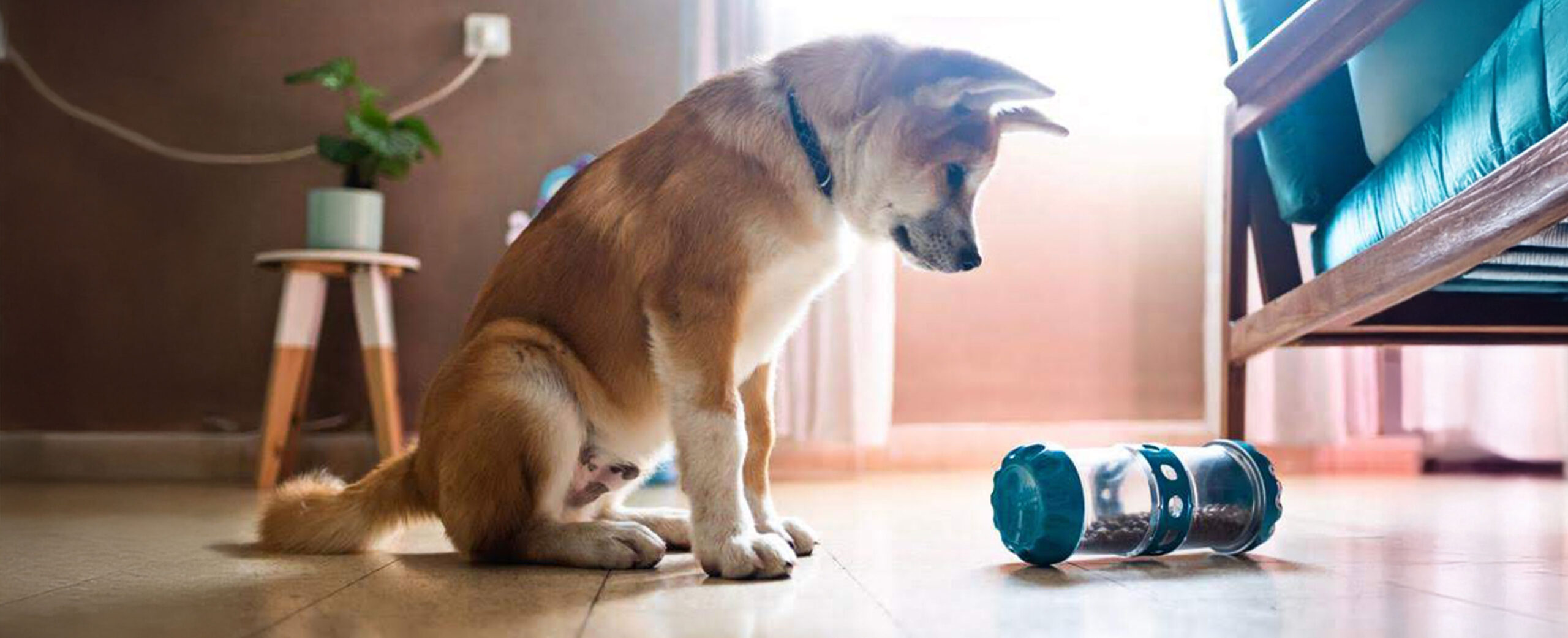
To understand what our dog does and feels when we are not home, it is recommended to film him when he is left alone. Filming allows us to get a reliable and clear picture of his behavior and identify potential problems—even if we are not sure they exist. Filming can answer important questions: Does the dog experience separation anxiety? Is he bored? Does he know how to relax? And occupy himself?
Monitoring via video and audio (sound and picture) provides a reliable diagnostic tool for the dog’s behavior in the owner’s absence.
In cases where the dog is anxious about being left alone, the video documentation will also serve as a monitoring tool during treatment—and will help distinguish whether there has been improvement or deterioration and guide the process in the right direction.
How to film:
Only video and audio footage can give a reliable diagnosis regarding the condition of your dog when it is left alone!
A video of Mikey with separation anxiety. In the video, Mikey works with FeedMe and manages to overcome the anxiety with the help of an organized treatment plan and using FeedMe as a tool for rewarding enrichment.Link to the video of Mikey before and after: